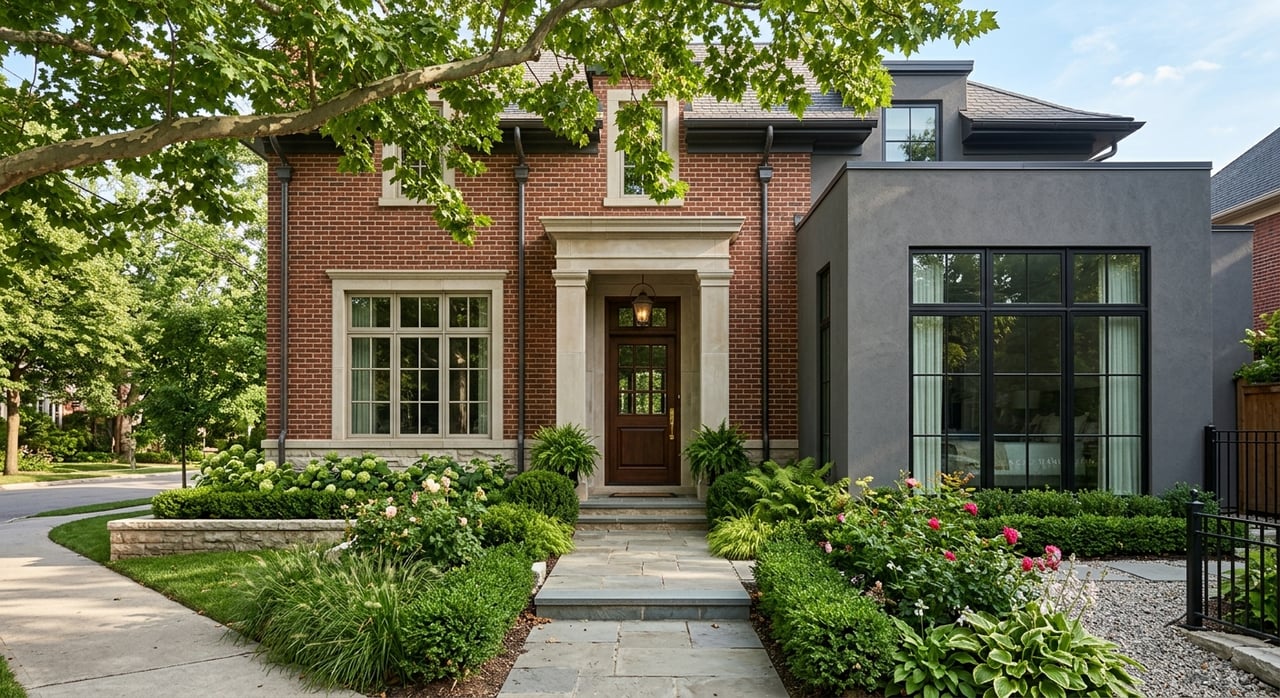
Wondering what “new” really means in one of Denver’s most established luxury neighborhoods? In Hilltop, new construction is rarely just about shiny finishes or extra square footage. If you are buying, selling, or simply watching the neighborhood evolve, it helps to understand how zoning, design, and buyer preferences are shaping today’s luxury infill. Let’s dive in.
Hilltop’s Luxury Infill Story
Hilltop is not a blank canvas. Its street pattern and residential character reflect a long history tied to late-19th-century development, nearby streetcar lines, and the joining of two subdivisions that were annexed to Denver in 1893.
That history still matters today. New construction enters a mature neighborhood with established lot patterns, generous setbacks, and a park-oriented streetscape that many buyers value just as much as the home itself.
Why Lot Rules Shape New Homes
A big reason Hilltop infill looks different from denser parts of Denver is zoning. Much of the neighborhood is governed by single-unit zoning, with common designations including E-SU-D and E-SU-G.
In practical terms, that means lot size, lot width, setbacks, and building coverage have a major impact on what can be built. In Hilltop, developers and homeowners are often working within a defined house envelope rather than pursuing a multiunit or highly urban form.
What E-SU-G Means
Denver defines E-SU-G as a single-unit district that allows suburban and urban houses on a minimum 9,000-square-foot zone lot. Urban Edge standards also regulate setbacks and building coverage based on lot width.
For you as a buyer or seller, that matters because the best Hilltop new construction usually feels proportionate to the lot. A home that fits the parcel well often has stronger long-term appeal than one that pushes every limit.
The Overlay Matters Too
Hilltop also has a conservation tool that influences exterior changes. Denver lists the Hilltop Heritage Conservation Overlay District as CO-1, and conservation overlays can be more restrictive than the underlying zoning.
That means exterior remodels, additions, and new construction may all be shaped by rules intended to conserve neighborhood character. The Hilltop Neighborhood Association also says its zoning committee reviews significant infill projects and works with the city and developers so new work aligns with the area’s cohesive aesthetic.
What Buyers Are Responding To
Hilltop does not reward one single style. Instead, the market appears to support two strong approaches when the design is thoughtful and well executed.
One is the classic exterior with a modern interior. The other is a fully contemporary or modernist home with a clear design identity.
Traditional Homes Still Carry Weight
Recent coverage from Denver7 highlighted a 1941 Tudor-style Hilltop home listed at $2.25 million with updated fixtures and amenities. The story also noted that Tudor homes are among Denver’s faster-selling styles.
That is an important signal if you own an older Hilltop home. You do not necessarily need to erase traditional character to meet current buyer expectations. In many cases, buyers respond well when historic form and modern function work together.
Modern Design Has a Place
Hilltop is also not frozen in time. Media coverage has featured an International Style home in the neighborhood, and Axios spotlighted a 1966 midcentury-modern Hilltop property that drew broad attention.
The takeaway is not that modern homes always outperform traditional ones. It is that Hilltop buyers appear open to a range of architecture when the design is intentional, the scale feels appropriate, and the home suits contemporary living.
Why the Streetscape Still Matters
Hilltop’s parks and parkways help explain why many newer homes aim for a sense of continuity with their surroundings. Cranmer Park, Robinson Park, Burns Park, and 6th Avenue Parkway are all part of the neighborhood setting that helps define Hilltop’s character and value.
In a neighborhood like this, a home is rarely judged in isolation. Buyers notice how it sits on the block, how it relates to mature trees and open space, and whether it contributes to the calm, established feel of the street.
Market Signals Behind the Trend
Hilltop sits firmly in Denver’s luxury tier, even if different market trackers measure that in different ways. Zillow estimates the average Hilltop home value at $1,497,036 and says homes go pending in around 12 days.
Redfin reports a March 2026 median sale price of $1,813,990, median days on market of 25, and a 96.6% sale-to-list ratio. Realtor.com describes Hilltop as a balanced market in March 2026, with 42 homes for sale and a median 46 days on market.
Those figures are not identical, but they point in the same direction. Hilltop remains a high-value market with limited inventory and steady buyer absorption.
What That Means for New Construction
In a market like this, new homes do not succeed simply because they are new. Buyers in the luxury segment tend to weigh design quality, condition, layout, and long-term livability alongside location.
Broader buyer data supports that idea. In NAR’s 2025 Home Buyers and Sellers Generational Trends report, home condition was the most common buyer compromise factor at 23%, followed by style at 18%, while neighborhood quality was cited by 7%.
The same report found that the median time homeowners stayed in a home before selling was 11 years. That suggests buyers are often thinking beyond first impressions and asking whether a home will hold up well over time.
How to Evaluate a Hilltop New Build
If you are considering a new or recently built home in Hilltop, the right question is not just whether it looks impressive. The better question is whether it fits the neighborhood and the lot in a way that supports lasting value.
A few details deserve close attention:
- How the home sits on the lot
- Whether the massing respects nearby homes
- How much open space remains for trees and outdoor living
- Whether the scale feels balanced from the street
- How the exterior design relates to Hilltop’s mature character
- Whether the project appears aligned with overlay and zoning expectations
These are not minor details in Hilltop. They are part of how projects are shaped, reviewed, and ultimately received by the market.
What Sellers Should Know
If you are preparing to sell in Hilltop, the strongest presentation usually starts with clarity. Buyers tend to respond when a home tells a coherent story, whether that story is rooted in preserved architectural character or in a confident, well-resolved modern design.
For classic homes, that often means preserving the original form while updating function, comfort, and finishes. For newer homes, it usually means avoiding a look that feels oversized or overly decorative for the setting.
Positioning Matters in Hilltop
In this neighborhood, buyers are often comparing more than square footage and finish packages. They are comparing proportion, design discipline, and how naturally a home fits into Hilltop’s established environment.
That is why pricing, presentation, and marketing should reflect the property’s architectural identity. A well-positioned Hilltop home is not sold as generic luxury. It is presented as a home with a clear place in a specific neighborhood context.
The Main Trend to Watch
The clearest Hilltop infill trend is not “bigger is better” or “modern beats traditional.” It is that buyers appear to reward homes with strong design logic, modern livability, and respect for the neighborhood’s existing framework.
That framework includes zoning, the conservation overlay, mature lots, established trees, and a luxury buyer pool that seems comfortable with both traditional and contemporary architecture when the execution is right. In other words, Hilltop’s best new construction tends to feel considered, not forced.
For buyers and sellers alike, that makes Hilltop one of Denver’s more nuanced luxury markets. Understanding the difference between flashy and lasting can make a real difference in how you evaluate opportunity here.
If you are thinking about buying or selling in Hilltop, the right guidance starts with neighborhood-level insight and a clear understanding of how design, context, and value intersect. The Wolfe Bouc Team offers discreet, informed advice for clients navigating Denver’s most architecturally significant neighborhoods.
FAQs
What defines new construction in Hilltop, Denver?
- In Hilltop, new construction usually refers to newly built single-family homes or major infill projects shaped by single-unit zoning, lot dimensions, setbacks, and the neighborhood’s conservation overlay.
Are modern homes popular in Hilltop, Denver?
- Yes. Recent examples suggest Hilltop buyers respond to both modern homes and classic architecture with updated interiors, as long as the design is intentional and well executed.
Does zoning affect luxury infill in Hilltop?
- Yes. Much of Hilltop is governed by single-unit zoning such as E-SU-D and E-SU-G, which influence lot coverage, setbacks, and the overall building envelope for new homes.
What is the Hilltop Heritage Conservation Overlay District?
- It is a Denver conservation overlay district, listed as CO-1, that is intended to conserve distinctive neighborhood character and can affect exterior remodels, additions, and new builds.
How should buyers evaluate a new home in Hilltop?
- Buyers should look at how the home fits the lot, whether the scale respects surrounding homes, how much open space remains, and whether the design feels compatible with Hilltop’s mature streetscape.
Is Hilltop a strong luxury market in Denver?
- Current market trackers place Hilltop in Denver’s luxury tier, with high home values, limited inventory, and steady buyer absorption, even though each platform reports slightly different metrics.