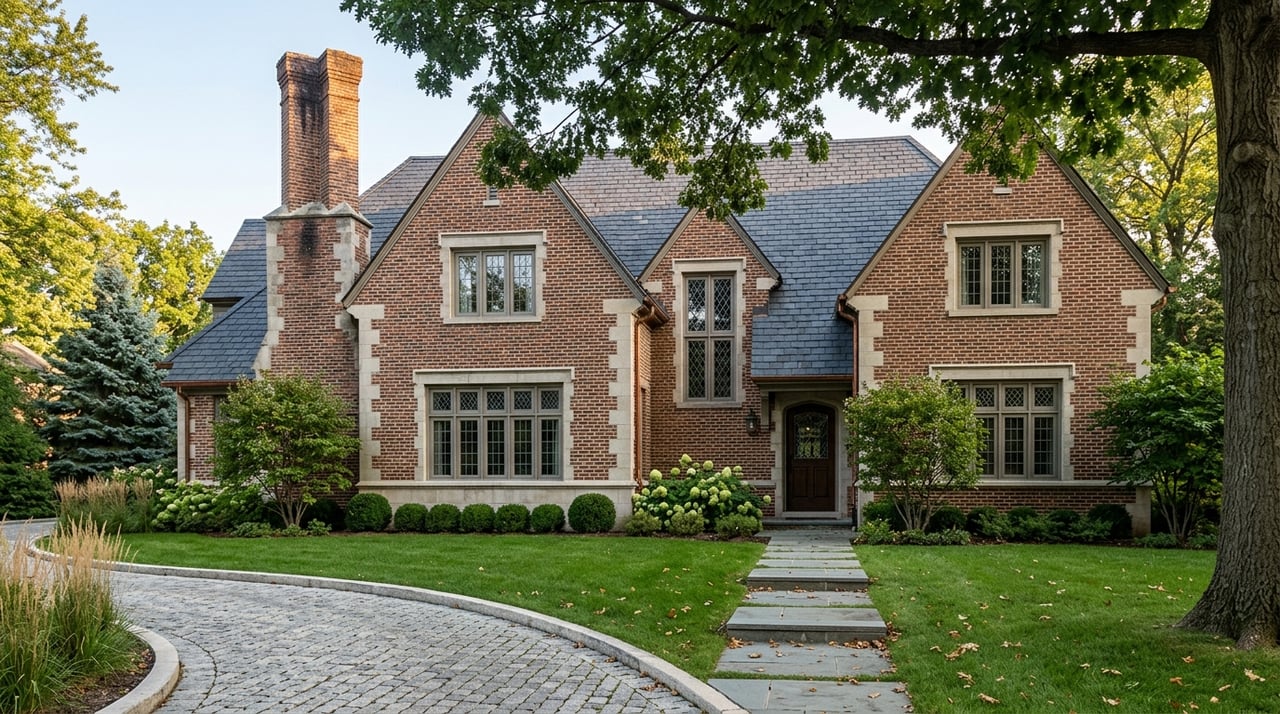
If you have ever driven through Denver’s Country Club and wondered why the neighborhood feels so distinct, the answer is not just the homes themselves. It is the way architecture, landscape, and planning work together to create a setting that feels gracious, established, and remarkably cohesive. If you are exploring the area as a buyer, seller, or simply someone who appreciates historic design, understanding these architectural styles can help you see what makes Country Club so enduring. Let’s dive in.
Why Country Club feels different
Country Club developed as one of Denver’s most prestigious early 20th-century residential areas, shaped by the Denver Country Club and the Cherry Creek golf course. According to the Denver Public Library’s overview of the Country Club Historic District, the neighborhood is defined by both high-quality architecture and a park-like sense of spaciousness.
That combination was intentional from the beginning. Denver’s Country Club Historic District design guidelines note that development began in 1902, with a plan that emphasized landscaped parkways inspired by Olmsted-era planning ideas. Most of the neighborhood was built out in the 1910s and 1920s, with later phases extending into the eastern sections.
As you move through the district today, that original vision still shows up clearly. Broad setbacks, generous landscaping, tree lawns, detached sidewalks in many areas, and formal gateways all help create a neighborhood that feels more like a landscape composition than a standard residential grid.
Park-like planning shapes the architecture
One reason Country Club reads as so refined is that the streetscape matters as much as the homes. Preservation guidance describes a district where you should still feel like you are “living in a park,” with large homes softened by lawns, trees, porches, bays, and carefully scaled entries.
That setting changes how you experience each architectural style. A brick Georgian Revival home feels more stately when it sits behind a broad lawn. A stucco Mediterranean house feels warmer and more relaxed when framed by mature trees and deep setbacks. In Country Club, architecture is never isolated from its site.
The neighborhood also benefits from an unusually strong roster of architects. The Denver Public Library notes that designers including William E. and Arthur A. Fisher, John J. Huddart, Frank Frewen, Ernest and Lester Varian, and Merrill and Burnham Hoyt all worked in the district, helping create a richer architectural mix than you might find in a more typical early suburb.
Denver Square and classical revival homes
Among the most recognizable house types in Country Club is the Denver Square. The district guidelines describe it as a simple rectangular volume, while the National Register nomination identifies key features such as a hipped roof, dormers, a square facade, a front porch, and large windows.
In Country Club, these homes often go beyond the straightforward local type. Many are enhanced with Colonial Revival or Georgian Revival detailing that gives them a more formal and polished appearance. You will often see brick facades, columned entries, pedimented porticos, fanlights, and sidelights.
This is part of what makes Country Club’s architecture so appealing. The underlying forms are practical and balanced, but the detailing gives each home a stronger sense of permanence and presence. For buyers who value both livability and design pedigree, that combination can be especially compelling.
What defines Colonial and Georgian Revival
Colonial Revival and Georgian Revival homes tend to emphasize order, symmetry, and classical detail. In Country Club, those qualities appear in centered entrances, evenly spaced windows, and restrained ornament that gives the home a timeless look.
The National Register nomination points to notable Georgian-detailed homes on Marion and Downing, along with the Georgian Revival Loughridge House. These examples help show how Country Club elevated familiar revival styles into something more architecturally significant through scale, materials, and craftsmanship.
Tudor Revival brings texture and silhouette
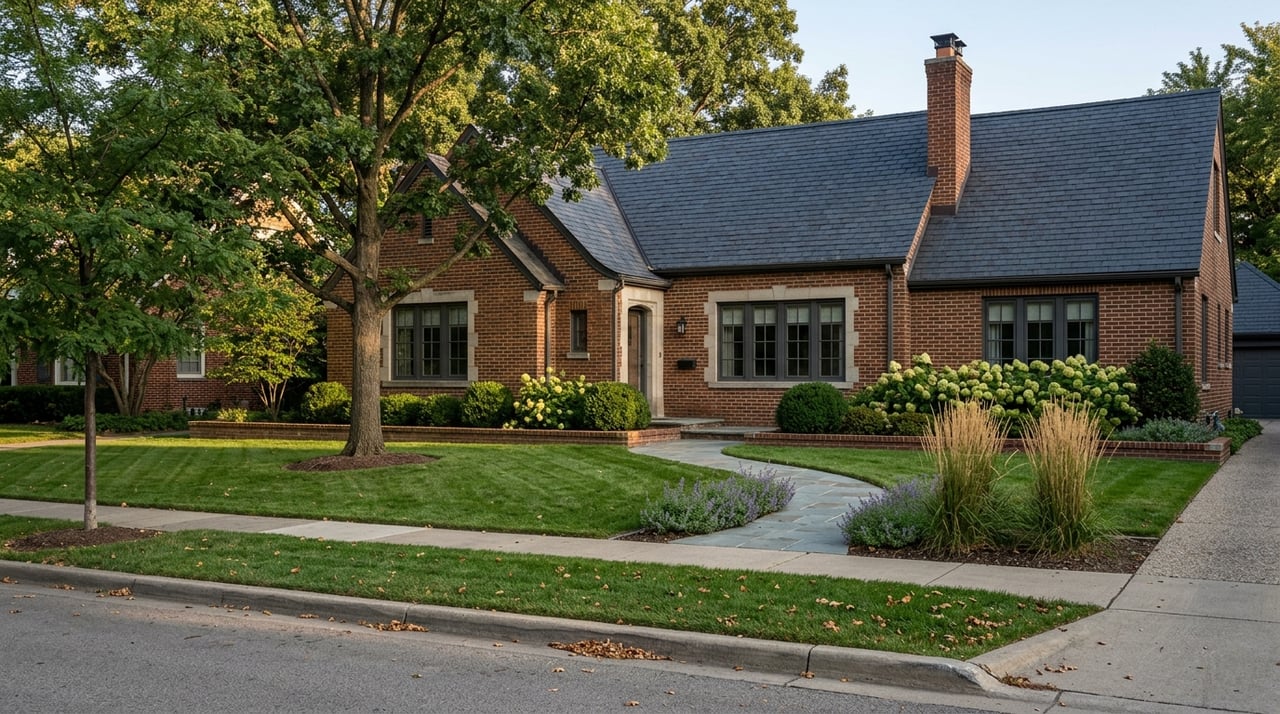
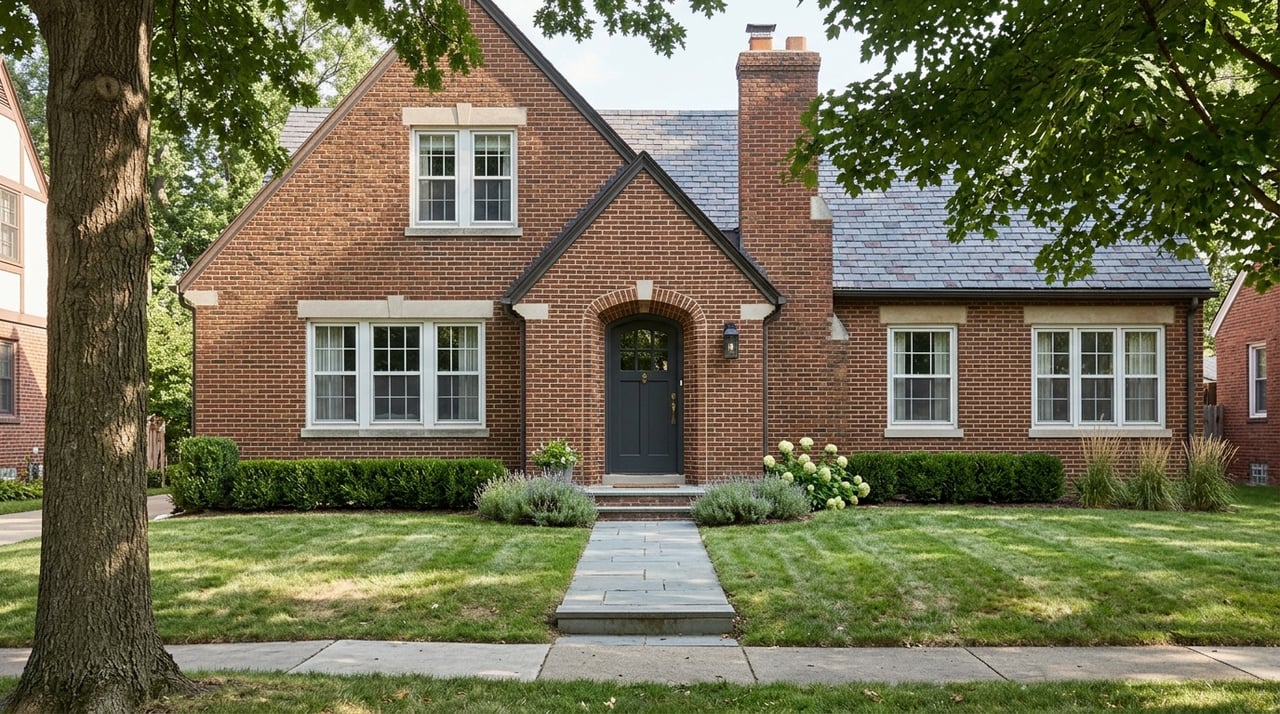
If classical homes bring formality, Tudor Revival adds drama. The National Register nomination identifies Tudor-influenced houses in Country Club through features such as cross-gable roofs, bracketed eaves, leaded panes, half-timbering, diamond-pane windows, and prominent chimneys.
These homes often stand out because of their silhouette. Steeper rooflines, strong masonry, and decorative chimney forms create a more romantic and textured look than the flatter massing of a Denver Square. In a neighborhood already defined by architectural quality, Tudor homes contribute depth and variety.
Examples named in the nomination include the Sewall Thomas-Lawrence Phipps House, the Morris House, the Sweeney House, and the Taussig House. Together, they illustrate how English-influenced design became an important part of Country Club’s later 1920s and 1930s character.
Why Tudor fits the neighborhood
Tudor Revival may feel visually distinct, but it still fits naturally within Country Club’s larger design language. The district guidelines emphasize that pitched roofs, roof texture, and smaller-scale architectural details are central to the area’s identity.
That means Tudor homes do not feel out of place here. Instead, they reinforce the neighborhood’s preference for rich materials, careful detailing, and houses that feel substantial without overwhelming the street.
Spanish and Mediterranean style define Country Club
If there is one style family that gives Country Club its most distinctive flavor, it is Spanish Colonial Revival and Mediterranean Revival. The National Register nomination makes this point clearly, noting that early architects were trying to find a style suited to Denver and that “the style they chose was Spanish or Mediterranean.” It also references older descriptions of Country Club as Denver’s “Spanish suburb.”
In practical terms, this means you will see stucco walls, red tile roofs, arches, balconies, and wrought-iron details throughout the district. Even the neighborhood plan incorporated Mediterranean gateways along Fourth Avenue, tying the architecture to the larger streetscape.
For many people, these are the homes that make Country Club instantly memorable. They bring warmth, texture, and a sense of old-world ease that feels distinct from the more formal brick-and-stone revival houses.
Notable Mediterranean features
The National Register nomination highlights several examples, including the Green House with Mediterranean influence, the Abbott House with a red tile roof, the Ingrahara and Kuykendall houses in Spanish Colonial Revival, and the Tyson Dines-Mary Converse House with Spanish-inspired ornament.
These homes often stand apart through their materials and surface treatment. Where a Georgian Revival house may rely on symmetry and brick, a Mediterranean home tends to create character through stucco, tile, arches, and layered exterior details. The result is a softer, more relaxed visual presence that still feels elegant and substantial.
Secondary styles add depth
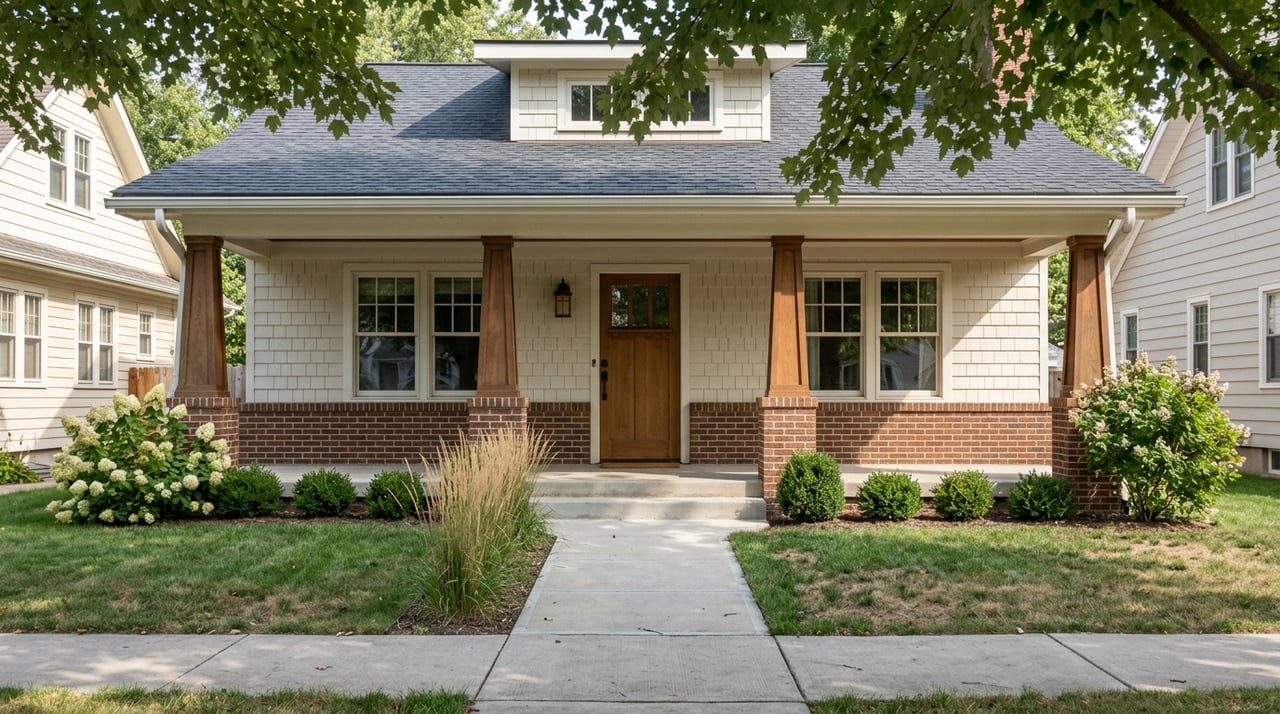
Although the neighborhood is best known for its larger revival homes, Country Club also includes a smaller number of bungalows and English-cottage forms. The district guidelines describe “eclectic revivals” with Colonial and Mediterranean variations as the most numerous, while the National Register nomination also notes an English cottage-style house within the district.
These secondary styles matter because they keep the neighborhood from feeling repetitive. Country Club’s appeal is not based on strict sameness. Instead, it comes from a thoughtful mix of styles that share certain underlying qualities, including masonry materials, simple forms, pitched roofs, and a strong relationship to the landscape.
Why this architectural mix still matters
One of the most important things about Country Club is that preservation efforts are not focused on making every home look the same. According to the district guidelines, the goal is to preserve the neighborhood’s variety of architectural styles and tradition of architectural excellence while maintaining the common traits that tie the district together.
That approach matters if you are considering buying or selling here. It means the value of Country Club is not tied to a single look. Instead, it comes from a rare balance of individuality and consistency. Homes can express different architectural traditions while still contributing to a unified neighborhood character.
The district also includes four subdistricts with different streetscape patterns, so the experience can vary from one area to another. Some blocks feel more traditional, while areas such as Park Lane Square introduce more curving forms and lawn-dominant planning. That layered character is part of what gives Country Club long-term design interest.
What buyers often notice first
For design-minded buyers, Country Club often stands out less because of one famous home and more because of the overall experience of moving through the neighborhood. Mature trees, generous yards, gateways, brick and stucco facades, and houses with strong rooflines all work together to create a setting that feels composed and lasting.
In that sense, the style labels are only part of the story. Denver Square, Georgian Revival, Tudor Revival, and Mediterranean Revival each bring something different, but they are most powerful when seen within the district’s larger framework of craftsmanship, scale, and landscape design.
If you are evaluating a home in Country Club, architectural style can tell you a great deal about its visual character. Just as important, though, is how that home participates in the neighborhood’s broader sense of space, setting, and historic continuity.
Whether you are preparing to buy, considering a future sale, or simply looking to better understand one of Denver’s most architecturally significant neighborhoods, thoughtful local guidance can make a real difference. The Wolfe Bouc Team brings a stewardship-minded perspective to Denver’s legacy neighborhoods and would be glad to help you navigate Country Club with clarity and discretion.
FAQs
What architectural styles define Denver’s Country Club neighborhood?
- Country Club is best known for Denver Square, Colonial Revival, Georgian Revival, Tudor Revival, Spanish Colonial Revival, and Mediterranean Revival homes, with a smaller number of bungalow and English-cottage forms.
Why is Country Club considered architecturally significant in Denver?
- The neighborhood is recognized for its concentration of high-quality early 20th-century architecture, prominent architects, and a park-like plan that combines broad setbacks, landscaping, and cohesive streetscapes.
What makes Mediterranean-style homes important in Country Club?
- Preservation and National Register materials identify Spanish and Mediterranean design as a defining part of the district, seen in features like stucco walls, red tile roofs, arches, balconies, and wrought-iron details.
Are Tudor Revival homes common in Denver’s Country Club?
- Tudor Revival is one of the neighborhood’s defining styles, especially in homes from the later 1920s and 1930s, with features such as steep gables, leaded windows, half-timbering, and prominent chimneys.
How does the Country Club Historic District preserve architectural variety?
- Denver’s preservation guidelines aim to maintain both the district’s variety of styles and its shared design traits, including masonry materials, pitched roofs, generous setbacks, and a park-like setting.
What should buyers notice beyond a home’s style in Country Club?
- Buyers often benefit from looking at the full setting, including the home’s scale, landscaping, setbacks, streetscape, and how it contributes to the neighborhood’s broader historic character.